10 High-Growth Mobile Proxy Use Cases for 2026 Web Scraping
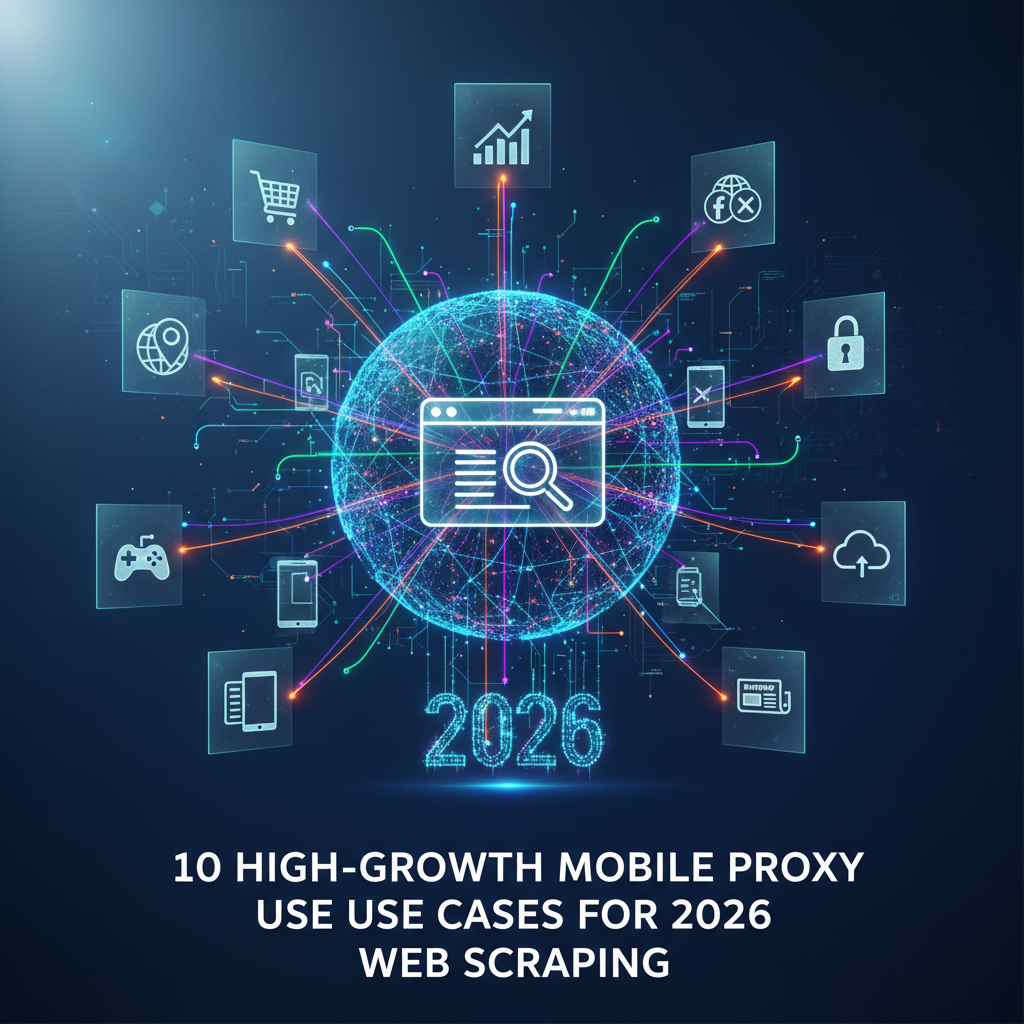
TL;DR: In 2026, mobile proxies are the ultimate tool for overcoming sophisticated anti-scraping mechanisms. By leveraging real 4G/5G IP addresses assigned by mobile carriers, businesses can scrape data with the highest trust scores, bypassing CAPTCHAs and IP bans that stop residential and data center proxies. Key use cases include AI model training, hyper-local SEO, and real-time e-commerce price tracking.
As we navigate the data-heavy landscape of 2026, the barrier between publicly available information and automated crawlers has never been higher. Modern websites now utilize behavioral forensics and AI-driven bot detection to block suspicious traffic. For developers and data scientists, this means traditional tools are no longer enough.
The shift toward Mobile Proxy Use Cases 2026 reflects a necessity: to blend in with legitimate mobile users. Because mobile IPs are shared among thousands of real people via CGNAT (Carrier Grade Network Address Translation), websites are extremely hesitant to block them. In this guide, we explore the ten most impactful ways these proxies are being used to drive innovation this year.
1. AI Training and Large Language Model (LLM) Feeds
The artificial intelligence boom of the mid-2020s has led to an insatiable hunger for high-quality, real-time data. In 2026, training an LLM requires more than just historical archives; it requires "live" data from social feeds, forums, and niche community sites.
Scraping Dynamic Social Content
Social media platforms have implemented some of the world's most advanced anti-bot shields. Mobile proxies allow scrapers to appear as standard users scrolling through a feed on a smartphone. This is essential for capturing trending sentiments and linguistic nuances used to fine-tune AI models.
Bypassing AI-Powered Bot Detection
Ironically, the same AI used to build LLMs is used to block scrapers. Mobile IPs carry a "reputation" that residential IPs sometimes lack, especially since many residential IPs have been flagged due to intensive use in previous years.
2. Hyper-Local SEO and SERP Tracking
Search engines in 2026 have become incredibly localized. A search for "crypto insurance" in London yields entirely different results than in New York or Tokyo. For agencies, SEO rank tracking requires seeing the web exactly as a local mobile user does.
Mobile-First Indexing Validation
Since Google and other search engines have moved entirely to mobile-first indexing, desktop proxies no longer provide an accurate picture of how a site is ranked. Using 4G/5G mobile proxies ensures that the data you scrape reflects the mobile SERP (Search Engine Results Page) accurately.
Competitor Ad Intelligence
Companies use mobile proxies to monitor which ads their competitors are running in specific zip codes. By rotating through mobile IPs, they can see localized ad copy and landing pages without triggering "suspicious activity" flags that would lead to the competitor hiding their ads from a known scraper IP.
3. Real-Time Price Monitoring in E-commerce
E-commerce giants like Amazon and Walmart use sophisticated price discrimination and dynamic pricing models. To keep up, scrapers must be invisible.
Avoiding "Ghost" Pricing
Websites often show different prices to scrapers than they do to real customers. This is called "ghost pricing." Mobile proxies provide the highest level of anonymity, ensuring the data collected reflects the actual price a customer would pay on their mobile app.
Global Market Arbitrage
In 2026, retail arbitrage has become highly automated. Traders use 4G/5G mobile proxies to scrape global marketplaces simultaneously, identifying price gaps in luxury goods or electronics before the market stabilizes.
4. Mobile App Testing and UX Research
Developing an app that functions globally requires more than just emulators. Developers must test how their apps interact with local CDNs (Content Delivery Networks) and localized APIs.
API Response Validation
By routing app traffic through a mobile proxy, developers can check if their APIs are serving the correct regional content. If you want to understand how a user in Seoul experiences your app's loading speed, a Korean mobile proxy is the only way to get an authentic measurement.
Ad Verification for Mobile Campaigns
Fraudulent ad networks often hide their activities when they detect a data center IP. Advertisers use mobile proxies to verify that their ads are actually appearing in the correct mobile apps and that the "clicks" they are paying for aren't coming from bot farms.
5. Account Management and Social Media Growth
Platform security in 2026 is uncompromising. If you manage multiple brand accounts, using a single IP address is a recipe for a permanent ban.
Multi-Account Security
Using 4G/5G mobile proxies allows each account to have its own mobile footprint. Because mobile IPs rotate frequently within a carrier's network, they provide a layer of "natural" behavior that residential IPs sometimes lack.
Managing High-Trust Platforms (TikTok & Instagram)
TikTok and Instagram are mobile-native. Accessing them via a desktop or a data center IP is an immediate red flag. Mobile proxies allow users to manage these accounts without triggering the "automated behavior" alerts that lead to shadowbanning.
6. Financial Data Aggregation and Fintech
Fintech apps that aggregate bank data or stock market trends face heavy regulation and strict security protocols.
Secure Data Scraping for Credit Scoring
Alternate credit scoring models use scraped data from utility bills and online spending habits to determine creditworthiness. Mobile proxies ensure that these scrapers aren't blocked by the security layers of financial institutions, which are often primed to block any traffic that doesn't look like a consumer device.
Cryptocurrency Market Analysis
In 2026, the crypto market is faster than ever. Scrapers need constant, uninterrupted access to exchange APIs and decentralized finance (DeFi) dashboards. Mobile proxies offer the stability and rotation needed to avoid rate-limiting on these sensitive platforms.
7. Cybersecurity and Threat Intelligence
Cybersecurity firms use mobile proxies to go "undercover" when investigating malicious sites or botnets.
Investigating Mobile Malware
To understand how mobile-specific malware behaves, researchers must use an environment that mimics a real mobile connection. If the malware detects a data center or VPN IP, it may go dormant to avoid detection. Mobile proxies provide the perfect cover.
Phishing Site Detection
Bots that scan the internet for new phishing pages use mobile proxies to avoid being blocked by the "cloaking" scripts used by hackers. These scripts often only show the phishing page to real mobile users while showing a blank page to security companies.
8. Travel and Hospitality Data Scraping
The travel industry is notorious for aggressive anti-scraping techniques due to the high volume of traffic from aggregators.
Global Fare Comparison
Airlines change prices based on the user's perceived location and device type. Mobile proxies allow travel aggregators to scrape fares from multiple regions, ensuring they offer their users the most competitive rates available globally.
Hotel Availability Monitoring
Hotel chains use geo-fencing to offer deals to local residents. To capture these deals for a global audience, scraping tools use mobile proxies localized to the hotel's city.
9. Mobile Proxy vs. Residential Proxy: The 2026 Verdict
A common question in the industry is: mobile proxy vs residential proxy, which is better?
The Trust Factor
While residential proxies use home Wi-Fi connections, mobile proxies use cellular data. In 2026, websites view mobile IPs as the "gold standard" of trust. If a website blocks a mobile IP, they risk blocking hundreds of legitimate users who share that same IP via the carrier's gateway.
Rotation and Persistence
Mobile proxies are inherently dynamic. This makes them significantly harder to track over time compared to residential IPs, which might remain static for days. For high-intensity scraping, the seamless rotation of mobile proxies provides a massive advantage in 2026.
10. Talent Acquisition and Job Market Analysis
HR tech companies use scraping to track job market trends and salary benchmarks across millions of listings.
Sentiment Analysis of the Workforce
By scraping platforms like Glassdoor or LinkedIn through mobile proxies, companies can gauge employee sentiment without being rate-limited. This data is crucial for 2026 recruitment strategies, where the competition for specialized AI talent is fierce.
Monitoring Remote Work Trends
Global companies scrape job boards to see where their competitors are hiring. Using mobile proxies allows them to see "local-only" listings that might not be visible to an international IP address.
Concluzii cheie
- Supreme Trust: 4G/5G mobile proxies are the most trusted IP type in 2026 due to the shared nature of mobile networks (CGNAT).
- AI Necessity: Modern LLMs and AI models rely on mobile proxies to scrape high-quality, real-time social data without being blocked.
- Hyper-Localization: For SEO and e-commerce, mobile proxies are the only way to see the web as a local mobile consumer.
- Security & Longevity: Mobile proxies offer better protection against account bans on platforms like Instagram and TikTok compared to residential options.
- Cost-Benefit: While often more expensive, the higher success rate of mobile proxies reduces the cost-per-successful-request in large-scale scraping projects.