Seeing the World Locally: The Role of Geo-Targeted Proxies in 2026 Marketing
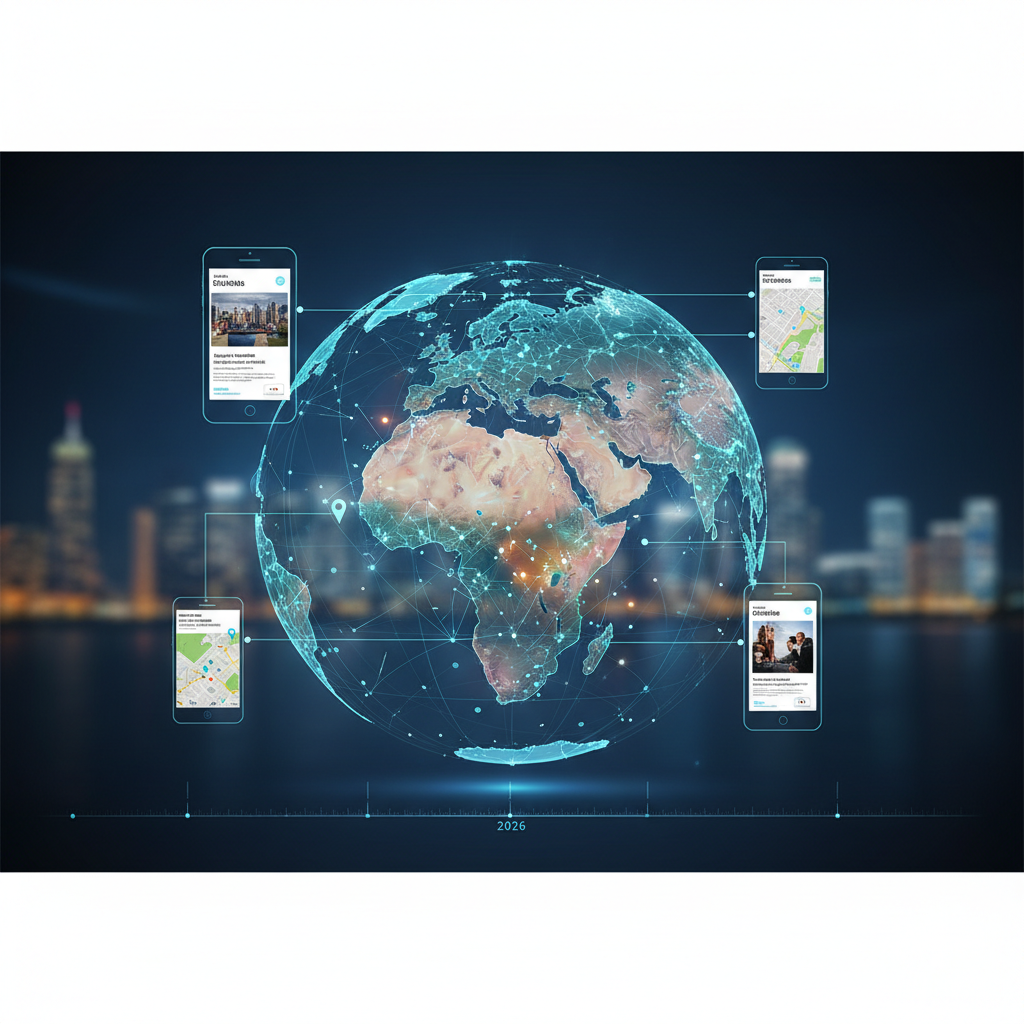
TL;DR: In 2026, personalized user experience is the gold standard of digital strategy. To succeed, brands must see the internet exactly as their local customers do. Using geo-targeted proxies for localized content testing and global SEO audits allows marketers to bypass geographic restrictions, verify local ad placements, and ensure hyper-relevant content delivery across the globe.
Seeing the World Locally: The Role of Geo-Targeted Proxies in 2026 Marketing
The digital landscape of 2026 is no longer a single, unified experience. Depending on whether a user is browsing from a cafe in Tokyo, a high-rise in London, or a suburban home in Texas, the internet they see—the ads, search results, pricing, and content—is vastly different. For businesses, this fragmentation presents a massive challenge: how do you manage a global brand when you cannot see what your local customers see?
The answer lies in geo-targeting in digital marketing 2026. High-performance proxies have evolved from simple privacy tools into essential marketing infrastructure. By simulating a local presence in any corner of the world, marketers can validate their strategies in real-time, ensuring that their global campaigns resonate on a local level.
The Evolution of Hyper-Localization in 2026
We have moved past the era of mere language translation. In 2026, localization encompasses cultural nuances, local economic fluctuations, regional compliance laws, and hyper-local search intent. Consumers now expect "glocal" experiences—global brands that feel like hometown staples.
The Rise of Regionalized Search Algorithms
Search engines have become incredibly sophisticated at detecting a user’s precise location. This means a search for "best cloud services" in 2026 yields different results in Berlin than it does in Singapore, not just because of the language, but because of regional data sovereignty and local market leaders. Marketers who don't account for these differences find their SEO efforts falling flat.
Beyond the VPN: The Proxy Advantage
While VPNs were once the standard for changing one’s digital location, they are often easily detected and blocked by sophisticated modern websites. Geo-targeted residential and mobile proxies, however, use real IP addresses assigned by local ISPs. This allows marketing teams to blend in as organic users, providing an unfiltered view of the local web environment.
The Critical Need for Global SEO Audits Proxies
Search Engine Optimization is no longer about one global ranking; it is about thousands of local ones. In 2026, a "Global SEO Audit" is really a series of interconnected local audits. Without the ability to mask your corporate IP and adopt a local identity, your SEO tools will likely show skewed data based on your physical headquarters.
Verifying Local Search Results (SERPs)
Search results are now heavily influenced by the proximity to data centers and local business listings. By using proxies to perform SEO audits, digital marketers can see exactly which competitors are dominating the "map pack" in specific cities. This insight allows for the adjustment of meta-tags, localized keywords, and backlink strategies that are tailored to the specific region’s search behavior.
Monitoring Competitor Pricing and Promotions
Dynamic pricing is the norm in 2026. Retailers adjust prices based on regional demand, local competition, and even local weather patterns. To keep a competitive edge, brands use proxies to scrape competitor data without being identified or fed "decoy" pricing. This type of reconnaissance is vital for maintaining a relevant value proposition across diverse markets. To ensure these automated checks remain undetected and localized, many experts recommend using best 4g-5g mobile proxies for ad verification and market research, as these provide the highest level of trust and regional accuracy.
Localized Content Testing Proxies: Quality Assurance for the Global User
Launching a campaign without local testing is one of the biggest risks a brand can take in 2026. A hero image that works in North America might be culturally insensitive in the Middle East, or a call-to-action might be technically broken due to regional payment gateway issues.
User Experience (UX) Validation
Localized content testing proxies allow QA teams to step into the shoes of any user. They can test if localized landing pages load correctly, if currency converters are accurate, and if the translation flows naturally within the layout. If a user in Paris sees a "404 error" or an untranslated button, the brand loses credibility instantly.
Ad Verification and Fraud Prevention
Digital ad fraud remains a multi-billion dollar problem. Marketers use geo-targeted proxies to verify that their ads are actually appearing on the sites they paid for and in the correct geographic locations. By simulating a local user, they can catch "ghost ads" or ads that are redirected to malicious sites, ensuring that the marketing budget is spent effectively.
Integrating Proxies into the Modern Marketing Stack
Successful geo-targeting in digital marketing 2026 requires a seamless integration between proxy networks and existing marketing tools. It is no longer a manual process of switching IPs; it is an automated, scalable workflow.
Automation and Headless Browsers
Modern marketing teams use tools like Puppeteer, Playwright, or Selenium combined with proxy rotations to automate their local checks. This allows for continuous monitoring of brand mentions and sentiment across various regional social media platforms and forums that might be otherwise inaccessible or restricted.
Privacy and Compliance
In the landscape of 2026, data privacy regulations (like the evolved GDPR and various national data acts) are stricter than ever. Using proxies helps marketers conduct research without infringing on the privacy of actual residents. It allows for anonymous data collection that focuses on market trends rather than individual user tracking, aligning with ethical marketing standards. To manage these complex workflows safely, professionals often use specialized software, and understanding what is an antidetect browser and how does it work is essential for maintaining multiple localized sessions without triggering security blocks.
Overcoming Geographic Restrictions and "Ghosting"
Many platforms utilize "geofencing" to restrict content or features to certain areas. While this is often for licensing reasons, it can hinder a marketing team’s ability to conduct a comprehensive global audit.
Accessing Region-Locked Content
Whether it's a regional social media trend or a competitor's localized video campaign, marketers need to see it to react to it. Proxies provide the "key" to these geofenced gardens, enabling brands to stay informed about what is trending in every market they serve.
Avoiding "Proxy Blocker" Technologies
In 2026, websites are better at detecting low-quality proxies. This has led to the rise of residential and mobile proxy networks that are indistinguishable from real users. For a marketing team, using high-quality residential IPs is the difference between getting the data they need and getting a "403 Forbidden" error.
The Future of Geo-Targeting: Predictive Localization
As we look toward the end of 2026, the role of proxies is shifting from reactive testing to predictive analysis. Marketers are using proxies to gather vast amounts of regional data to feed AI models. These models can then predict which products or messages will trend in specific cities months in advance.
AI-Driven Local Market Analysis
By constantly "living" in hundreds of locations via proxy servers, a brand’s AI can detect subtle shifts in local discourse. This allows for the creation of content that isn't just localized, but "pre-localized"—meeting the customer's needs just as they arise.
Real-Time Creative Optimization
Imagine an ad that changes its background based on the actual local weather in the viewer's city, verified by a proxy-checked local feed. This level of hyper-relevance is what defines the vanguard of marketing in 2026.
Choosing the Right Proxy Infrastructure
Not all proxies are created equal. For professional marketing use, the choice of infrastructure can determine the accuracy of your data.
- Residential Proxies: Best for SEO audits and seeing the web as a home user.
- Mobile Proxies: Essential for testing mobile apps and verifying social media ads, as they use cellular networks.
- Datacenter Proxies: Useful for high-speed scraping of public data where IP reputation is less of a concern.
For most geo-targeting tasks in 2026, a mix of residential and mobile proxies provides the most robust solution for bypassing sophisticated anti-scraping and geo-blocking measures.
Concluzii cheie
- Geo-targeting in digital marketing 2026 is the primary driver for global brand success, requiring a granular view of local digital ecosystems.
- Global SEO audits proxies are mandatory for accurate SERP tracking, as search engines now provide hyper-localized results that vary city by city.
- Localized content testing proxies protect brand reputation by ensuring that translations, UI elements, and cultural nuances are correct before the customer sees them.
- Ad Verification through proxies is a critical defense against ad fraud, ensuring that marketing spend reaches the intended regional audience.
- Residential and Mobile IPs have become the gold standard for proxies in 2026 due to their high trust scores and ability to bypass sophisticated geofencing.
- Scalability is achieved by integrating proxy networks directly into automated marketing stacks and AI-driven analysis tools.