Top 5 Python Frameworks for Web Scraping with Modern Proxies in 2026
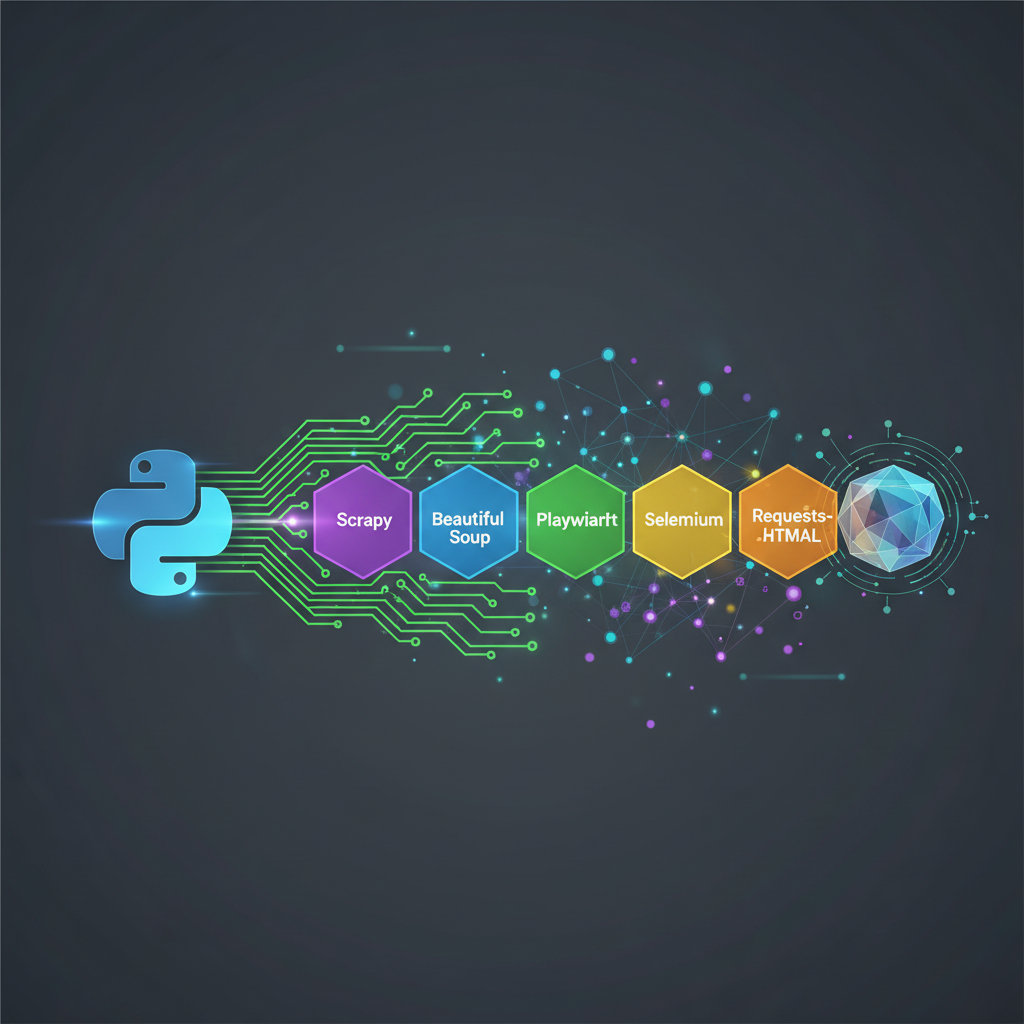
TL;DR: In 2026, the best Python web scraping libraries focus on bypassing AI-driven anti-bot systems via asynchronous execution and headless browser automation. The top contenders are Playwright, Selenium, Scrapy, BeautifulSoup (with HTTPX), and Crawlee for Python. For success, pairing these with modern residential or mobile proxies is essential to avoid IP fingerprinting.
The landscape of data extraction has shifted dramatically as we move through 2026. Websites now employ sophisticated behavioral analysis and TLS fingerprinting to block automated scripts. Choosing the right python web scraping library 2026 is no longer just about parsing HTML; it is about simulating human behavior and managing high-velocity requests without being detected.
Whether you are building a price monitor, a sentiment analysis tool, or a competitive intelligence engine, your choice of framework will determine your success rate against modern firewalls.
1. Playwright: The Industry Leader for Browser Automation
Playwright has officially overtaken its predecessors as the go-to tool for modern web scraping. Developed by Microsoft, it offers native support for all modern rendering engines (Chromium, WebKit, and Firefox) with a single API.
Playwright Proxy Integration
In 2026, playwright proxy integration is the gold standard for stealth. Unlike older tools, Playwright allows you to set proxies at the "browser context" level. This means you can run multiple isolated scraping sessions—each with a different IP address and cookies—within a single browser instance. This drastically reduces CPU and RAM overhead.
Auto-waiting and Resilience
One of the reasons Playwright dominates the 2026 landscape is its "auto-wait" functionality. It automatically waits for elements to be actionable before performing tasks, which eliminates the need for "sleep" timers that often tip off anti-bot systems.
2. Selenium: The Resilient Veteran with 2026 Updates
Selenium remains a powerhouse due to its massive ecosystem and the introduction of the Selenium 5 architecture. While once considered "heavy," the selenium proxy setup 2026 has been optimized to handle WebDriver BiDi, allowing for faster, two-way communication between the script and the browser.
Dealing with Advanced WAFs
Modern Selenium scripts frequently employ "Undetected ChromeDriver" patches to strip away the browser properties that reveal automation. If you are targeting sites protected by advanced Web Application Firewalls, understanding how proxies are used for web scraping within Selenium is vital. By routing Selenium traffic through a rotating residential proxy pool, you can mask the automated nature of the connection.
Enhanced Grid Capabilities
In 2026, Selenium Grid 5 allows for seamless scaling across cloud environments. This is particularly useful for enterprise-level scraping where you need to distribute tasks across hundreds of nodes globally.
3. Scrapy: The High-Performance Distributed Framework
For large-scale projects requiring the extraction of millions of pages, Scrapy remains the most efficient python web scraping library 2026. It is built on Twisted, an asynchronous networking framework, making it incredibly fast.
The Power of Scrapy Signals
Scrapy’s architecture allows developers to hook into the "engine" using signals. You can write custom middlewares to handle retries, user-agent rotation, and sophisticated proxy management.
Why Scrapy Needs Proxies
Because Scrapy is so fast, it can easily overwhelm a target server. This leads to immediate IP bans. When using Scrapy, it is a best practice to use rotating residential proxies to ensure that every request appears to come from a new, legitimate household device. This prevents the "rate limiting" triggers common on e-commerce and social media platforms.
4. HTTPX + BeautifulSoup: The Async Request Scraping Duo
Not every project requires a full headless browser. For websites that serve data directly in the initial HTML or via unprotected JSON endpoints, the combination of async request scraping via HTTPX and parsing via BeautifulSoup is unbeatable for speed.
Benefits of HTTPX in 2026
Traditional libraries like requests are synchronous, meaning they wait for one page to download before starting the next. HTTPX supports async/await, allowing you to send hundreds of concurrent requests. In 2026, speed is a double-edged sword; while it gathers data faster, it also makes your pattern easier to spot if your IP isn't changing.
When to Choose BeautifulSoup
BeautifulSoup remains the easiest library for navigating the DOM (Document Object Model). When paired with the lxml parser, it can process thousands of lines of HTML in milliseconds, making it the perfect "final step" in an async pipeline.
5. Crawlee for Python: The New Contender
Originally famous in the JavaScript ecosystem, Crawlee was ported to Python in recent years and has become a favorite for 2026 developers. It is built to be "stealth by default."
Stealth and Fingerprinting
Crawlee automatically manages browser fingerprints, including headers, TLS versions, and screen resolutions. It intelligently switches between headless and headful modes based on the challenges it encounters.
Integrated Proxy Management
Crawlee features a built-in proxy provider class. You can simply feed it your proxy credentials, and it will handle the rotation, session management, and blacklisting of failed IPs automatically. This reduces the boilerplate code developers have to write, allowing them to focus on the data logic rather than infrastructure.
Hardware and Logic: Optimizing Your 2026 Scrapers
Selecting a library is only half the battle. To ensure your scrapers remain functional through 2026, you must optimize the underlying logic.
Asynchronous Execution Patterns
Modern scraping is all about concurrency. Using Python's asyncio library alongside Playwright or HTTPX allows you to manage tasks efficiently. However, high concurrency requires a robust proxy backend. If you send 50 requests at the same second from the same IP, you will be flagged. Modern 2026 workflows rely on "sticky sessions" where a proxy IP is maintained for a specific journey (like a checkout flow) and then discarded.
Handling JavaScript Rendering
More sites in 2026 are built using frameworks like Next.js and SvelteKit, which hydrate content on the client side. This means that if you just view the source code, the data isn't there. Libraries like Playwright and Selenium are mandatory for these sites, but they come at a higher computational cost.
Summary of Python Web Scraping Options in 2026
| Library | Primary Use Case | Proxy Support | Performance |
|---|---|---|---|
| Playwright | JavaScript-heavy sites | Built-in / Context level | High (Async) |
| Selenium | Legacy support/Complex UI | Custom WebDriver config | Moderate |
| Scrapy | Large-scale crawling | Via Middleware | Very High |
| HTTPX + BS4 | Static data/APIs | Client-side blocks | Highest |
| Crawlee | Stealth-first scraping | Managed Provider | High |
Future-Proofing Your Scraping Strategy
As we look forward to the remainder of 2026 and beyond, the trend is clear: Stealth is more important than speed. The most successful data scientists are moving away from simple scripts toward "Browser Fingerprinting Management." This involves not just changing your IP, but also ensuring your fonts, canvas rendering, and even battery status look like a real user's device.
Integrating your chosen python web scraping library 2026 with a reliable proxy network is the only way to bypass modern detection. Residential proxies, which use IPs assigned by ISPs to homeowners, are the most effective way to blend in with organic traffic.
Concluzii cheie
- Playwright is the overall winner for 2026 due to its async speed and native proxy isolation.
- Async request scraping with HTTPX is the best choice for non-JavaScript targets to maximize throughput.
- Rotating proxies are mandatory regardless of the library to prevent IP-based blocking and rate limiting.
- Selenium remains relevant for specific edge cases involving complex browser interactions and legacy plugins.
- Crawlee for Python is the rising star for developers who want "stealth by default" without manual configuration.