Global SEO: How to Track Keyword Rankings Across Different Countries Automatically
Global SEO: How to Track Keyword Rankings Across Different Countries Automatically
TL;DR: To track global keyword rankings in 2026, businesses must automate data collection using advanced SEO rank tracking tools powered by localized search results. By leveraging specialized SERP analysis proxies, you can bypass geo-blocking and personalization, ensuring your organic visibility data is accurate for every specific market you serve.
In the hyper-competitive digital landscape of 2026, "ranking #1" no longer means the same thing to every user. Search engines have evolved to deliver hyper-localized results based on the searcher’s IP address, device language, and physical GPS coordinates. If you are managing a global brand, relying on a single "universal" rank check is a recipe for strategic failure.
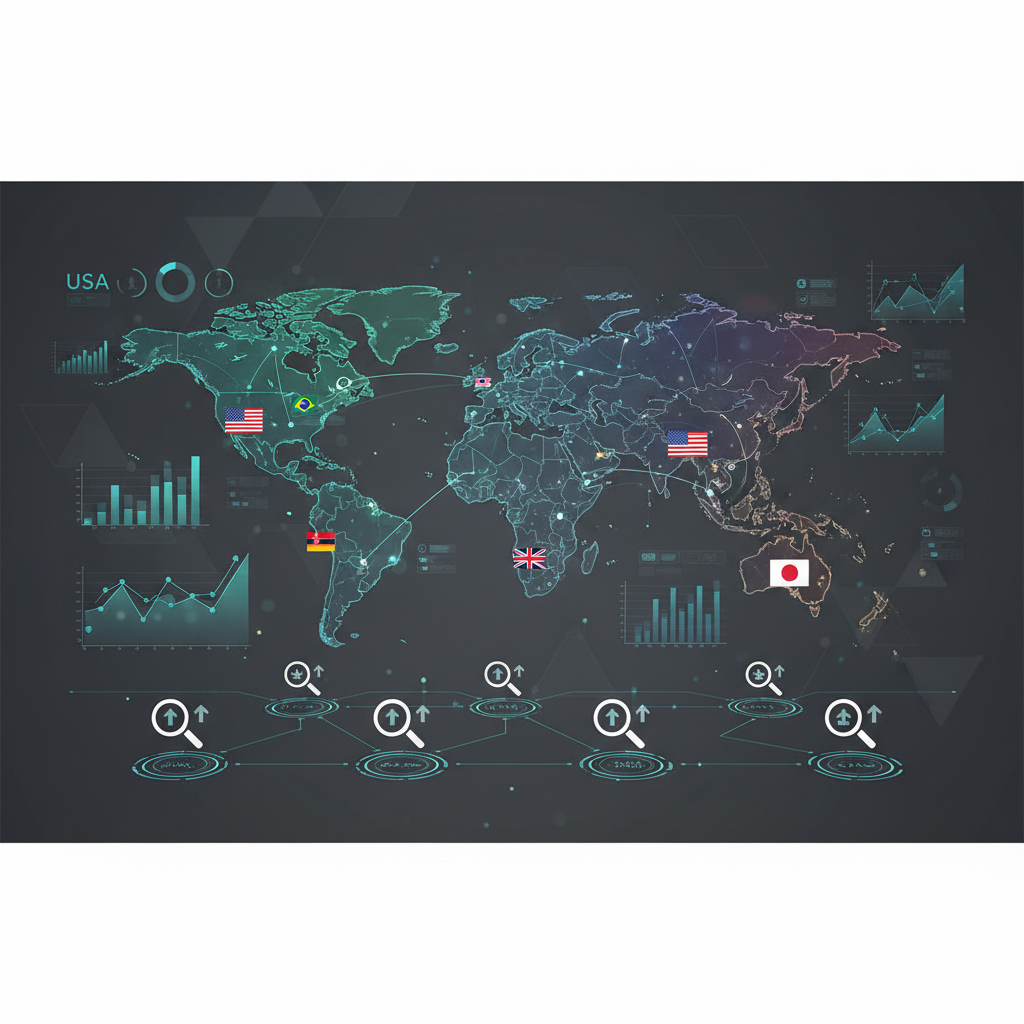
To succeed internationally, you need to see exactly what a user in Tokyo, London, or New York sees. Accomplishing this at scale requires more than just manual searching; it requires an automated ecosystem of SEO rank tracking tools and high-quality proxy infrastructure to simulate local presence across the globe.
1. The Complexities of Localized Search Results in 2026
Search Engine Results Pages (SERPs) are no longer static lists of links. They are dynamic environments influenced by hundreds of real-time variables.
Understanding Geo-Personalization
Google and Bing prioritize the user experience by serving results that are contextually relevant to the user's location. A search for "best cloud storage" will yield different service providers and pricing pages in Germany than it will in Australia. This is not just about language translation; it’s about local data centers, regional regulations (like GDPR), and local market dominance.
The Problem with Manual Tracking
Manually checking rankings by changing your "Search Settings" is outdated. Search engines can still detect your true origin via browser fingerprints and WebRTC leaks. To get a true reflection of the market, automation is the only way to aggregate thousands of data points daily without human error or bias.
2. Choosing the Right SEO Rank Tracking Tools
Modern SEO rank tracking tools in 2026 have moved beyond simple spreadsheets. The top-tier platforms now offer API integrations and granular filtering.
Key Features to Look For:
- Zip-Code Level Tracking: The ability to track rankings down to a specific city or neighborhood.
- Mobile vs. Desktop Parity: Search intent often differs by device; your tool must track both separately.
- SERP Feature Monitoring: Does your tool track Featured Snippets, Local Packs, and People Also Ask boxes? In 2026, these are often more valuable than position #1.
- Frequency of Updates: Daily tracking is the industry standard for high-volatility niches.
The Role of Infrastructure
Even the best SEO software requires a solid foundation. When gathering data from thousands of regions simultaneously, many tools rely on rotating residential proxies: how they work & when to use them to ensure the search engine treats each request as a unique, local seeker rather than a bot.
3. The Role of SERP Analysis Proxies in Automation
If you are building an in-house tracking solution or using a "bring your own proxy" tool, the quality of your IP addresses is the most significant factor in data accuracy.
Why Data Center Proxies Fail
Search engines easily identify and block data center IP ranges. If you use them for rank tracking, you will likely encounter CAPTCHAs or, worse, "shadow" results—modified SERPs that the search engine serves to suspected bots, which do not reflect what real users see.
The Advantage of Residential and Mobile IPs
To truly automate global SEO tracking, you must use residential proxies. These IPs are assigned by Internet Service Providers (ISPs) to real homes. When your tracking script uses a residential IP located in Paris, the search engine sees a legitimate French resident. This is essential for gathering market intelligence that is free from the distortions of data center masking.
4. Setting Up an Automated Workflow for International Ranking
Transitioning from local to global SEO requires a structured workflow to prevent data overwhelm.
Step 1: Segmentation by Market
Divide your keyword lists by country and language. Do not mix "High-performance laptops" (US) with "High-performance laptops" (UK) in the same bucket, as the competitors and search trends will differ.
Step 2: Defining Search Intent by Region
A keyword may have "informational" intent in a market where you are new, but "transactional" intent in a market where your brand is established. Your automated tracking should tag these keywords accordingly to help you interpret why rankings might be fluctuating.
Step 3: Integrating API Data
For enterprises, the dashboard of an SEO tool is often not enough. Automated tracking should ideally feed into a central data warehouse (like BigQuery or Snowflake) via API. This allows you to cross-reference ranking shifts with actual conversion data from your internal CRM.
5. Overcoming Anti-Scraping Measures and CAPTCHAs
Search engines are increasingly protective of their data. As you scale your automated tracking, you will hit roadblocks.
Handling Rate Limits
Automated tools must "throttle" their requests. Sending 10,000 queries at once from a single localized point will trigger a block. High-quality rank tracking sequences prioritize "stealth" by mimicking human typing speeds and varying the time between requests.
Browser Fingerprinting
Beyond just the IP address, search engines look at header information, screen resolution, and fonts. Advanced global tracking tools use "headless browsers" that can be configured to look like a specific version of Chrome or Safari popular in the target country.
6. Interpreting Localized Rank Data
Data is only as good as the insights you derive from it. When you see a drop in a specific country, you must investigate the "why."
Competitor Auditing
Sometimes a drop in your rank isn't because you did something wrong, but because a local competitor in South Korea or Brazil launched a massive localized backlink campaign. Automated tools should track the "top 10" movements, not just your own position, to alert you to new regional threats.
Algorithm Variations
While Google’s core updates are global, they often roll out in stages or have different impacts based on the language processing capabilities of the AI (like MUM or Gemini). Automated tracking helps you identify if a ranking volatility is localized to a specific language or if it is a worldwide shift.
7. The Future of Global SEO Tracking in 2026
As we look further into 2026, the rise of SGE (Search Generative Experience) and AI-driven answers is fundamentally changing the "ranking" metric.
Moving Beyond Position Numbers
Rank tracking is shifting toward "Pixel Height" and "Share of Voice." If an AI summary takes up the first 800 pixels of a mobile screen, being "Position 1" in the organic links is effectively being below the fold. Automated tools now use visual scraping to determine how much screen real estate your brand actually occupies.
Voice and Visual Search
With the proliferation of AI wearables and smart home devices, localized voice search tracking is becoming a necessity. Automation scripts are now being designed to simulate voice queries in different dialects to ensure brands remain the "recommended" answer in localized voice responses.
Concluzii cheie
- Localization is Mandatory: In 2026, tracking universal rankings is obsolete; you must track at the city or country level using localized search results.
- Automation Requires High-Quality Proxies: To avoid blocks and get accurate data, residential and mobile proxies are the gold standard for SERP analysis.
- Feature-Rich Tools: Choose SEO rank tracking tools that monitor SERP features (snippets, AI boxes) rather than just blue links.
- Device Differentiation: Always track mobile and desktop rankings separately, as search engines treat them as distinct environments.
- Data Integration: Connect your rank tracking data to your broader business intelligence tools via API for a holistic view of global performance.