Why Marketers Need Mobile Proxies in 2026

Most digital marketers assume that a residential proxy is good enough for any campaign task. That assumption is costing them real money. Whether you’re running ad verification, scraping competitor pricing, or conducting mobile market research, why marketers need mobile proxies comes down to one technical reality: mobile carrier IPs operate at a fundamentally different trust level than any other proxy type. Mobile ads exceed 60% of digital budgets, yet most marketing teams are still verifying and researching through IPs that platforms treat with suspicion. That gap between spend and verification accuracy is exactly where mobile proxies deliver.
Table of Contents
- Key Takeaways
- What makes mobile proxies different from other proxy types
- Mobile proxies for ad verification
- Market research and competitive intelligence
- Best practices for using mobile proxies in marketing
- Ethical and practical considerations
- My take on mobile proxies as a marketing necessity
- How Hydraproxy supports your mobile proxy needs
- FAQ
Key Takeaways
| Point | Details |
|---|---|
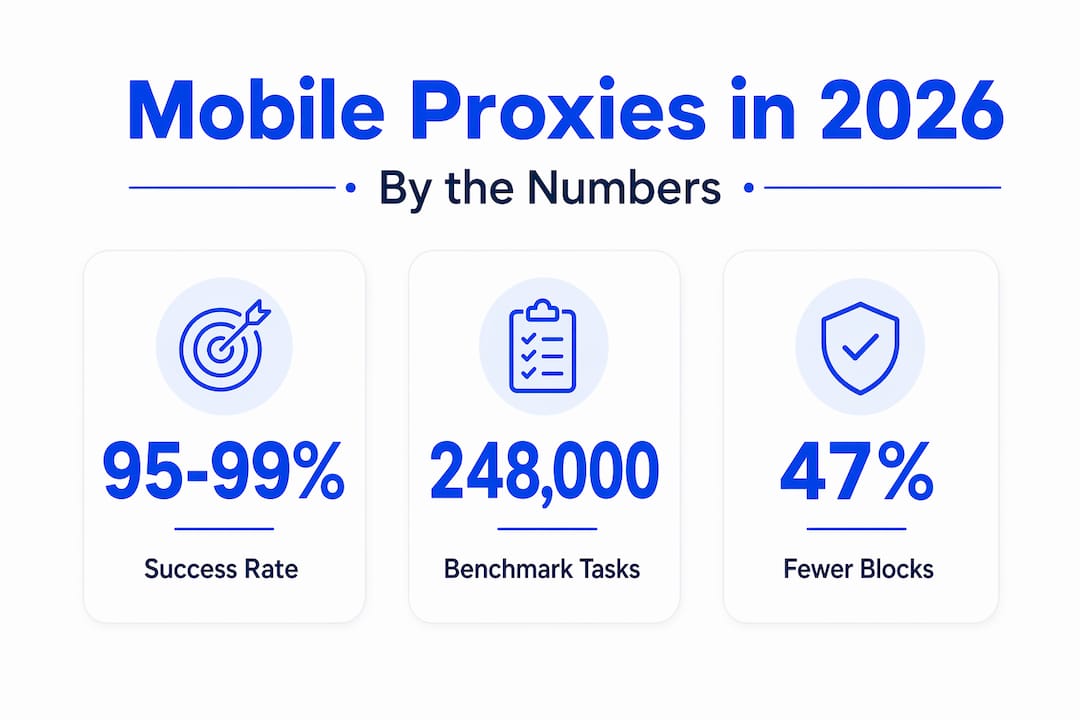
| Mobile proxies outperform alternatives | Businesses using mobile proxies report 47% fewer IP blocks compared to datacenter proxies in marketing tasks. |
| Ad verification requires mobile IPs | Verifying mobile ad placements without carrier IPs produces sanitized or inaccurate results that misrepresent real user experiences. |
| CGNAT creates a unique trust tier | Shared carrier IPs make blocking economically damaging for platforms, giving mobile proxies practical unblockability no other proxy type offers. |
| Fingerprint alignment is non-negotiable | Matching user agent, timezone, and viewport to the proxy’s carrier location prevents detection even with high-trust IPs. |
| Dedicated vs. shared depends on use case | Long-term account management on strict platforms requires dedicated mobile proxies, while high-volume scraping suits shared rotating pools. |
What makes mobile proxies different from other proxy types
Before getting into the specific marketing applications, you need to understand what separates mobile proxies from residential and datacenter alternatives at the technical level.
Mobile proxies route your traffic through real SIM cards connected to mobile carrier networks like AT&T, T-Mobile, or Vodafone. The IP addresses assigned to these connections come from actual 4G and 5G mobile networks, not server farms or home broadband connections. That distinction matters enormously to the platforms you’re trying to access.
The critical technical factor is Carrier-Grade NAT (CGNAT). Mobile carriers use CGNAT to share a single public IP address across thousands of simultaneous users. When a platform sees traffic from a mobile IP, blocking it means cutting off thousands of legitimate users at once. Platforms avoid blocking mobile IPs precisely because of that collateral damage risk. This creates a structural advantage no residential or datacenter proxy can replicate.
Here’s how the three main proxy types compare on the metrics that matter most to marketers:
| Proxy type | IP source | Trust level | Block rate | Best use case |
|---|---|---|---|---|
| Datacenter | Server farms | Low | High | Basic scraping, low-risk tasks |
| Residential | Home broadband | Medium | Medium | General research, geo access |
| Mobile | Carrier networks (4G/5G) | High | Very low | Ad verification, mobile scraping |
Mobile proxies achieve 95 to 99% success rates against anti-bot systems in benchmark testing across 248,000 tasks. That performance gap is not marginal. It reflects the structural trust advantage that CGNAT architecture provides, and it directly translates to more reliable data for every marketing workflow that depends on accurate web access.
Mobile proxies for ad verification
Ad verification is where the mobile proxy advantages become impossible to ignore. Consider what happens when you try to verify a mobile ad campaign using a datacenter or residential IP. The ad server recognizes the non-mobile connection and either withholds the ad entirely or serves a sanitized version that does not reflect what real users see.
Mobile proxies show exactly what real users see, including the actual creative, landing page, and any redirect chain in between. This matters for several specific verification scenarios:
- Programmatic ad verification: Confirm that your programmatic buys are appearing on the intended placements and not being redirected to low-quality inventory.
- In-app ad verification: Verify that mobile app ads are rendering correctly across different carriers and device types in your target markets.
- Affiliate fraud detection: Identify whether affiliate partners are serving legitimate ads or substituting fraudulent content to claim commissions.
- Geo-targeted campaign validation: Carrier and city-level targeting is necessary to confirm that geo-specific ads are actually reaching the intended audience segments.
Without mobile IPs, you’re verifying mobile campaigns through a lens that doesn’t match your audience’s actual experience. The ad server knows the difference, and it adjusts what it shows accordingly.
Pro Tip: When verifying geo-targeted mobile campaigns, match your proxy’s carrier to the specific network your audience uses in that region. A campaign targeting users on a regional carrier will behave differently than one targeting national network subscribers, and your verification setup needs to reflect that.
Explore mobile ad verification proxies to understand how carrier-level IP targeting changes what you can see and confirm in your campaigns.
Market research and competitive intelligence
Beyond ad verification, mobile proxies fundamentally change the quality of competitive intelligence you can gather. Most mobile-first platforms, including social media apps, e-commerce sites, and app stores, serve different content based on the type of connection detected. Accessing these platforms through a datacenter IP often triggers bot detection or returns generic content that doesn’t reflect regional pricing, localized promotions, or carrier-specific offers.
Here’s how to apply mobile proxies systematically to competitive research:
- E-commerce price monitoring: Simulate real mobile shopping sessions to capture the prices, promotions, and product availability that competitors show to actual mobile users in specific regions.
- Social media content research: Access platform content as a genuine mobile user would, avoiding the restricted views that platforms serve to detected bots or non-mobile connections.
- App campaign tracking: Monitor competitor app install campaigns and in-app advertising by accessing app store environments through real carrier IPs.
- Regional offer verification: Bypass geo-restrictions to access the correct localized pricing and promotional content that competitors serve in different markets.
The benefits of mobile proxies for competitive intelligence extend beyond just avoiding blocks. You get data that actually reflects the mobile user experience, which is the experience that the majority of your audience has. Research built on desktop or residential proxy data systematically underrepresents how mobile users interact with your competitors’ content.
Pro Tip: Pair mobile proxy sessions with analytics data from your own campaigns to identify gaps between what you’re serving and what competitors are offering to the same audience segments. Analytics-driven marketing decisions produce measurably better outcomes when the underlying data reflects real user conditions.

Best practices for using mobile proxies in marketing
Knowing why to use mobile proxies is only half the equation. How you configure and operate them determines whether you get reliable results or trigger detection anyway.
Session management and rotation strategy
Successful mobile proxy workflows use sticky sessions that mimic real user behavior rather than rotating IPs rapidly between requests. A real mobile user maintains the same IP for the duration of a browsing session. Switching IPs every few requests signals automated behavior to anti-bot systems. Use rotating IPs for high-volume scraping tasks, but switch to sticky sessions for any workflow that involves account access, ad verification, or extended browsing simulations.
Fingerprint alignment
High-trust carrier IPs are not enough on their own. Mismatched fingerprints trigger detection even when the IP itself is clean. Your user agent, viewport size, timezone, and browser language settings all need to match the carrier and geographic location of the proxy you’re using. A proxy from a US carrier paired with a European timezone setting is a detectable inconsistency.
Proxy selection: shared vs. dedicated
- Shared rotating pools work well for large-scale scraping tasks where session continuity is less critical and volume is the priority.
- Dedicated mobile proxies are necessary for platform account management, long-term monitoring tasks, and any workflow on platforms like Instagram or TikTok where session consistency prevents shadow bans.
Pro Tip: Review the static vs. rotating mobile proxy options before committing to a configuration. The right choice depends on whether your task requires persistent identity or anonymous volume.
Ethical and practical considerations
Using mobile proxies responsibly is not just about avoiding platform bans. It’s about maintaining the data integrity that makes your marketing decisions reliable in the first place.
Mobile proxies improve anonymity by masking your actual IP address, which protects your organization from tracking by advertisers, competitors, and malicious actors during research operations. When used correctly, this also supports compliance with privacy regulations by limiting the exposure of your internal infrastructure.
Ethical mobile proxy use in marketing centers on a few clear principles:
- Data integrity first: Use proxies to access accurate, unfiltered data rather than to manipulate results or circumvent legitimate security measures.
- Fraud detection, not fraud execution: Mobile proxies are a tool for identifying ad fraud and verifying campaign integrity, not for generating false impressions or clicks.
- Platform policy awareness: Understand the terms of service for platforms you access through proxies. Verification and research workflows generally fall within acceptable use. Automated account creation or policy manipulation does not.
- Privacy-compliant data handling: The anonymity mobile proxies provide should be paired with responsible data storage and processing practices that align with GDPR and other applicable regulations.
Positioning mobile proxies as part of a transparent marketing toolkit means using them to see what’s actually happening in your campaigns, not to obscure what you’re doing.
My take on mobile proxies as a marketing necessity
I’ve worked with marketing teams across multiple verticals on ad verification and competitive research projects, and the pattern I see repeatedly is this: teams that delay adopting mobile proxies do so because of cost concerns, then spend far more correcting data errors and investigating ad fraud after the fact.
The cost argument against mobile proxies doesn’t hold up when you account for what bad data actually costs. I’ve seen campaigns where 20 to 30% of mobile ad spend was going to placements that only became visible through carrier-level verification. That’s not a proxy cost problem. That’s a revenue problem that mobile proxies solve.
What I find most compelling about mobile proxies in 2026 is that the platforms they’re used against are getting more sophisticated every quarter. Anti-bot systems are improving. Detection algorithms are tightening. The gap between mobile proxy performance and residential proxy performance in high-detection environments is widening, not closing. Teams that build their workflows around mobile proxies now are establishing infrastructure that will remain effective as detection pressure increases.
The mindset shift I’d encourage is straightforward: stop treating mobile proxies as a premium add-on and start treating them as the baseline requirement for any marketing workflow that touches mobile data. The privacy and security benefits compound over time, and the competitive intelligence advantage compounds even faster.
— Eduard
How Hydraproxy supports your mobile proxy needs
If the use cases above match your current marketing challenges, Hydraproxy’s mobile proxy infrastructure is built specifically for the workflows described in this article.
Hydraproxy provides 4G and 5G mobile proxies across real carrier networks, with support for both rotating and sticky session configurations. Their [mobile proxy solutions](https://hydraproxy.com/mobile-proxy servers-explained-sim-cards-carriers-and-ip-rotation) cover ad verification, competitive scraping, and geo-targeted market research with carrier and city-level targeting precision. The platform supports multiple authentication methods, instant access with no monthly commitments, and flexible billing that lets you scale based on actual campaign needs. For teams ready to move beyond residential proxies and build marketing workflows on carrier-grade IP infrastructure, Hydraproxy’s full proxy suite provides the technical foundation to do it reliably.
FAQ
What are mobile proxies and why do marketers use them?
Mobile proxies route traffic through real SIM cards on carrier networks, assigning genuine 4G or 5G IP addresses. Marketers use them because carrier IPs receive higher platform trust and produce more accurate data for ad verification, scraping, and competitive research.
Why can’t residential proxies replace mobile proxies for ad verification?
Residential proxies use home broadband IPs, which ad servers can distinguish from mobile connections. Mobile ad verification requires carrier IPs to see the actual ads served to real mobile users rather than sanitized or withheld content.
How does CGNAT make mobile proxies harder to block?
Carrier-Grade NAT shares one public IP across thousands of users simultaneously. Blocking that IP disrupts thousands of legitimate users, so platforms avoid doing it, giving mobile proxies a structural unblockability advantage over other proxy types.
Do mobile proxies help with GDPR compliance?
Mobile proxies mask your organization’s actual IP during research operations, limiting infrastructure exposure. When paired with responsible data handling practices, they support privacy-compliant data collection workflows.
When should I use dedicated vs. shared mobile proxies?
Use dedicated mobile proxies for long-term account management and platform monitoring where session consistency matters. Shared rotating pools are better suited for high-volume scraping tasks where speed and IP variety are the priority.