Rotating vs Sticky Proxy Benefits for Scraping in 2026

Rotating and sticky proxies are defined by how they assign IP addresses during a scraping session, and that single difference determines whether your workflow succeeds or fails at scale. Rotating proxies assign a new IP for each request or on a configurable interval, giving you IP diversity across thousands of concurrent threads. Sticky proxies hold one IP for the full session duration, preserving login state, cookies, and multi-step navigation. Choosing between them is not a matter of preference. It is a technical decision driven by your target site’s behavior, your concurrency requirements, and whether your workflow requires authentication. Providers like Hydraproxy and Bright Data both support rotating and sticky session modes, making the choice yours to make correctly.
1. Rotating vs sticky proxy benefits for scraping: the core distinction
Rotating proxies are the default choice for stateless, high-volume scraping. Each request or short interval gets a fresh IP from a pool, which means no single IP accumulates enough request history to trigger a ban. This is the primary benefit for scraping public data: product listings, search engine results pages, news feeds, and price comparison data. Rotating sessions support up to 50 concurrent threads, each operating under a different IP, which translates directly into faster data collection across multiple sources simultaneously.
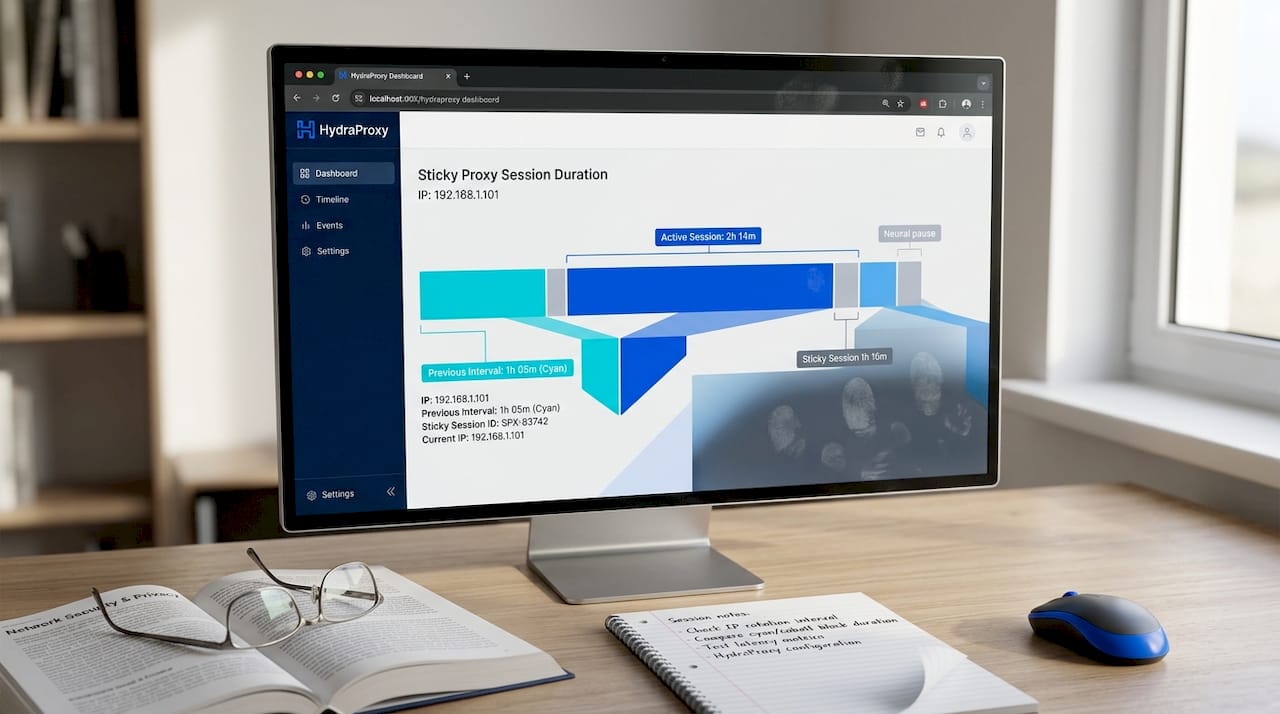
Sticky proxies serve a different function entirely. They maintain the same IP for a configurable window, typically between 1 and 30 minutes, which is the duration needed to complete a login, navigate a multi-page checkout, or submit a form protected by CSRF tokens. Without session continuity, these workflows break at the authentication step. The distinction is not about which proxy type is better. It is about which one matches the structure of your scraping task.
2. Key benefits of rotating proxies for large-scale data collection
Rotating proxies deliver three concrete advantages for high-volume scraping operations.
- IP diversity at scale. Each request draws from a large pool, so no single IP accumulates enough traffic to trigger rate limits or bans. This is the primary defense against IP-based blocking on sites that monitor request frequency per address.
- High concurrency. Parallel threads each operate under distinct IPs, which means you can scrape dozens of sources simultaneously without cross-contaminating request histories.
- Lower per-IP exposure. Because each IP handles fewer requests, the individual risk profile per address stays low. This extends the usable life of your proxy pool.
- Stateless task compatibility. Public data scraping does not require session continuity. Rotating proxies are purpose-built for this class of task.
The critical operational nuance here is rotation frequency. Aggressive per-request rotation can itself trigger bot detection, because rapid IP cycling is a recognizable bot signal. One controlled test found that block-only rotation consumed 5 proxies overnight versus more than 200 for per-request rotation, with fewer blocks in the block-only group. That result means rotating on every request is not just wasteful. It actively reduces your scraping success rate.
Pro Tip: Trigger proxy rotation only when you receive a block signal, a 403 response, or a CAPTCHA challenge. Holding a stable IP until a block occurs preserves your pool and reduces detection risk.
3. When and why to use sticky proxies in data scraping workflows
Sticky proxies are the correct choice whenever your scraping task requires session state. The specific scenarios where they are non-negotiable include:
- Login-dependent scraping. Sites that require authentication invalidate sessions if the IP changes mid-flow. Sticky proxies hold the same IP across the full authenticated session.
- Multi-step navigation. Workflows that move through paginated results, shopping carts, or account dashboards require IP consistency across every step.
- CSRF-protected forms. Many modern web applications bind CSRF tokens to the originating IP. A mid-session IP change causes the token to fail, breaking the workflow entirely.
- IP-dependent pagination. Some sites serve paginated content based on session identity. Rotating IPs mid-pagination returns inconsistent or duplicate data.
Sticky sessions typically last between 1 and 30 minutes, configured via session tokens or cookie durations. After expiration, the next request may draw any healthy IP from the pool. This means your scraping framework must either complete its task within the session window or handle IP transitions gracefully by resetting cookies and re-authenticating.
The trade-off with sticky proxies is concentrated IP exposure. Fewer IPs handle more requests per session, which increases the risk of those specific IPs being flagged. Residential IPs mimic real users and provide longer session life compared to datacenter IPs, which get flagged quickly due to ASN reputation issues. For account-sensitive operations, residential sticky sessions are the correct infrastructure choice.
Pro Tip: Set your sticky session duration to match the expected length of your workflow, not the maximum available. A 5-minute session for a 3-minute checkout flow wastes less IP exposure than a 30-minute session for the same task.
4. How rotating and sticky proxies compare across key metrics
The table below presents a direct proxy comparison for scraping across the dimensions that matter most to data analysts and engineers.
| Metric | Rotating proxies | Sticky proxies |
|---|---|---|
| IP assignment | New IP per request or interval | Fixed IP for session duration (1 to 30 min) |
| Concurrency | High. Up to 50+ parallel threads with distinct IPs | Limited by session caps per IP |
| Session support | None. Breaks login and stateful flows | Full. Preserves cookies, tokens, and auth state |
| Ban risk profile | Low per-IP exposure. Higher aggregate detection if rotation is too aggressive | Higher per-IP exposure. Fewer IPs absorb more traffic |
| Cost structure | Charged per GB, same rate regardless of session type | Same per-GB rate. Retries from IP burning can increase effective cost |
| Best fit tasks | Public data scraping, SERP monitoring, price aggregation, news feeds | Login scraping, account management, multi-step forms, checkout flows |
One finding that surprises many engineers: bandwidth cost is identical per GB whether you use rotating or sticky sessions. Providers including Bright Data and IPRoyal price by data volume, not session mode. The cost difference emerges indirectly. Sticky sessions that burn IPs faster generate retries, which consume additional bandwidth. Rotating sessions that trigger excessive rotation waste proxy pool capacity. Both inefficiencies are operational, not pricing-level.
5. Operational best practices for rotating and sticky proxy setups
Proxy type selection is only half the equation. How you operate your proxies determines whether your scraping infrastructure holds up under real-world conditions.
-
Rotate on block signals, not on every request. Pairing a stable IP with a consistent browser fingerprint until a block is detected produces longer proxy pool health and less proxy consumption. This is the single most impactful operational change most scrapers can make.
-
Match cookie jars to proxy identities. Cookies and session state must align with the proxy IP in use. The correct pattern is one proxy identity paired with one cookie jar. Switching IPs mid-session without resetting cookies causes detection and forces re-authentication, wasting both time and bandwidth.
-
Synchronize browser fingerprints with your proxy IP. Browser fingerprinting and session state management matter more for bot detection than IP rotation alone. Residential sessions improve trust scoring and concurrency tolerance. Datacenter proxies face higher challenge rates regardless of rotation strategy.
-
Handle session expiration with automation. Your scraping framework must detect when a sticky session expires and respond by resetting the session, clearing cookies, and re-authenticating before continuing. Frameworks that fail silently on session expiration produce corrupted or incomplete datasets.
-
Use hybrid proxy configurations for multi-phase workflows. Hybrid setups run rotating residential proxies for data collection and sticky sessions for login and account warming simultaneously. This approach balances concurrency for stateless tasks with session persistence for authenticated ones, without requiring separate infrastructure.
-
Monitor TLS fingerprint consistency. Modern anti-bot systems like those deployed by Cloudflare and Akamai inspect TLS handshake patterns alongside IP reputation. A rotating IP paired with an inconsistent TLS fingerprint is more detectable than a stable IP with a clean fingerprint profile.
Pro Tip: Build session expiration handling into your scraping framework before deployment, not after your first mid-session failure. Graceful re-authentication is far cheaper than debugging corrupted data pipelines.
6. How to decide between rotating and sticky proxies for your project
The decision framework is straightforward when you apply it to your specific workflow requirements.
- Does your task require authentication? If yes, sticky proxies are mandatory. Rotating proxies break login flows without exception.
- Is your target data publicly accessible without a session? If yes, rotating proxies are the correct default. They provide IP diversity and concurrency that sticky proxies cannot match for stateless tasks.
- What is your concurrency requirement? High-volume parallel scraping favors rotating proxies. Session-bound workflows have inherent concurrency limits regardless of proxy type.
- How sophisticated is your target site’s anti-bot system? Sites using Cloudflare, PerimeterX, or DataDome require residential IPs and fingerprint consistency in addition to the correct session mode. Datacenter IPs fail faster on these targets regardless of rotation strategy.
- What is your bandwidth budget? Both proxy types cost the same per GB, but IP burning from concentrated sticky session use increases retry volume. Factor retry rates into your cost model.
- Is your workflow multi-phase? A scraping project that begins with public data collection and then moves into account-level data extraction needs both proxy types. Start with rotating proxies for the stateless phase, then switch to sticky sessions for the authenticated phase.
The practical starting point for most projects is to test rotating proxies on stateless scraping first. If session issues arise or your workflow requires authentication, add sticky sessions for those specific workflow stages rather than replacing your entire proxy configuration.
Key takeaways
Rotating and sticky proxies are complementary tools, and selecting the wrong type for a given workflow directly reduces scraping success rates and increases operational cost.
| Point | Details |
|---|---|
| Rotating proxies for stateless tasks | Use rotating proxies for public data scraping where IP diversity and concurrency are the primary requirements. |
| Sticky proxies for authenticated workflows | Use sticky sessions for login flows, CSRF-protected forms, and multi-step navigation that require IP continuity. |
| Rotate on block signals only | Triggering rotation only on block events preserves proxy pool health and reduces bot detection risk. |
| Match cookies to proxy identity | One cookie jar per proxy identity prevents session invalidation and detection from IP-user mismatches. |
| Hybrid setups for complex projects | Run rotating proxies for data collection and sticky sessions for account-level tasks simultaneously. |
Why proxy type selection is more nuanced than most guides admit
Most articles on this topic frame rotating and sticky proxies as an either-or choice. That framing is operationally incorrect, and it leads engineers to under-configure their scraping infrastructure from the start.
In practice, the projects that fail are not the ones that picked the wrong proxy type. They are the ones that picked the right proxy type and then mismanaged the session layer. I have seen rotating proxy setups burn through 200 IPs overnight on a task that should have consumed fewer than 10, purely because rotation was triggered on every request rather than on block signals. The proxy type was correct. The rotation logic was not.
The more important insight is that IP rotation and session management are separate problems. Rotating proxies solve IP diversity. They do not solve fingerprint consistency, cookie alignment, or TLS handshake patterns. Sites running modern anti-bot infrastructure inspect all of these signals simultaneously. An engineer who treats proxy rotation as the complete solution to bot detection will hit walls that better session management would have avoided entirely.
The correct mental model is layered: choose the right proxy type for the session structure of your task, then layer in fingerprint consistency, cookie jar alignment, and signal-driven rotation logic on top. That combination produces scraping infrastructure that holds up at scale. Proxy type alone does not.
— Eduard
Hydraproxy residential and rotating proxies for scalable scraping
Hydraproxy provides residential IP pools with both rotating and sticky session modes, giving you the infrastructure to run either configuration or both simultaneously across your scraping workflows.
The residential proxy network at Hydraproxy covers a broad range of geolocations with configurable session durations, high concurrency support, and per-GB billing that applies equally to rotating and sticky sessions. For multi-phase projects, you can run rotating sessions for public data collection and sticky sessions for authenticated workflows within the same infrastructure. Setup is immediate, with no monthly commitments and multiple authentication methods supported. If you are building or scaling a scraping operation in 2026, the proxy use cases page covers the specific configurations relevant to market research, price aggregation, and data collection workflows.
FAQ
What is the main difference between rotating and sticky proxies?
Rotating proxies assign a new IP for each request or on a short interval, while sticky proxies maintain the same IP for a fixed session duration of 1 to 30 minutes. The difference determines whether your scraping workflow can maintain session state across multiple requests.
When should you use sticky proxies instead of rotating proxies?
Use sticky proxies whenever your scraping task requires authentication, multi-step navigation, or CSRF token handling. Login-dependent workflows break immediately with rotating proxies because the IP change invalidates the session.
Do rotating and sticky proxies cost different amounts?
No. Proxy bandwidth cost is the same per GB regardless of session mode. Providers including Bright Data and IPRoyal charge by data volume, not by whether you use rotating or sticky sessions.
Can you use rotating and sticky proxies together in one scraping project?
Yes. Hybrid configurations run rotating proxies for stateless data collection and sticky sessions for login and account-level tasks simultaneously. This approach is standard practice for multi-phase scraping workflows that combine public and authenticated data sources.
Does rotating proxies more frequently improve scraping success?
No. Excessive rotation triggers bot detection signals on its own. Rotating only when a block is detected produces better results and consumes significantly fewer proxy resources than per-request rotation.